Bipartisan Lawmakers Sign-on to the FY27 Historic Preservation Fund Dear Colleague Letter

More than 120 bipartisan Senators and Representatives  — representing 34 different states and territories —signed on to the FY27 House and Senate Historic Preservation Fund Dear (HPF) Colleague Letter. This far exceeds the total number of signers from last several years, demonstrating broad support for the HPF. Scroll down to see the complete list of signers and join us in thanking these lawmakers for their outspoken support of historic preservation!

As we commemorate the 250th anniversary of the signing of the Declaration of Independence and the 50th anniversary of the Historic Preservation Fund (HPF), we’re urging Congress to invest in the places that tell our nation’s story by providing $250 million for the HPF.

This year’s House and Senate letters requested up to $250 million in funding for the Historic Preservation Fund, the same level Preservation Action and advocates from around the country advocated for during National Historic Preservation Advocacy Week. The letter urges robust funding for State Historic Preservation Offices at $70 million, $34 million for Tribal Historic Preservation Offices, includes $25 million for digitization of state and Tribal records to accelerate the delivery of critical infrastructure projects, $13 million for the Historically Black Colleges and Universities preservation grant program, and $108 million for six existing preservation grant programs.

The letters also noted the urgent need to reauthorize the Historic Preservation Fund. The House letter was led by the co-chairs of the Historic Preservation Caucus, Rep. Mike Turner (R-OH) and Rep. Teresa Leger Fernández (D-NM), while the Senate letter was again led by Sen. Kirsten Gillibrand (D-NY) and Sen. Bill Cassidy (R-LA). The final letters were submitted to the House and Senate Interior Appropriations Subcommittee.

Thank you to everyone that reached out to their members of Congress and urged them to sign on in support of a record funding for the Historic Preservation Fund. Preservation Action would especially like to thank Reps. Turner and Leger Fernández and Sens. Gillibrand and Cassidy for their continued leadership on historic preservation!


Thank You!

Did your Representative and Senators sign-on? Be sure to thank them for their vocal support of historic preservation! Below are the list of signers organized by state.

FY27 Senate HPF Dear Colleague Letter Final Signers (32 total)

  • Alex Padilla (CA)
  • Michael Bennet (CO)
  • John Hickenlooper (CO)
  • Richard Blumenthal (CT)
  • Chris Murphy (CT)
  • Lisa Blunt Rochester (DE)
  • Jon Ossoff (GA)
  • Tammy Duckworth (IL)
  • Richard Durbin (IL)
  • Bill Cassidy (LA)
  • Ed Markey (MA)
  • Angela Alsobrooks (MD)
  • Chris Van Hollen (MD)
  • Angus King (ME)
  • Elissa Slotkin (MI)
  • Amy Klobuchar (MN)
  • Tina Smith (MN)
  • Cory Booker (NJ)
  • Andy Kim (NJ)
  • Martin Heinrich (NM)
  • Ben Ray Luján (NM)
  • Catherine Cortez Masto (NV)
  • Jacky Rosen (NV)
  • Kirsten Gillibrand (NY)
  • Ron Wyden (OR)
  • Jack Reed (RI)
  • Sheldon Whitehouse (RI)
  • Tim Kaine (VA)
  • Mark Warner (VA)
  • Bernie Sanders (VT)
  • Peter Welch (VT)
  • Maria Cantwell (WA)

FY27 House HPF Dear Colleague Letter Final Signers (91 total)

  • Aumua Amata Radewagen (AS)
  • Greg Stanton (AZ)
  • Mark DeSaulnier (CA)
  • Jared Huffman (CA)
  • Judy Chu (CA)
  • Jimmy Gomez (CA)
  • Sara Jacobs (CA)
  • Mike Thompson (CA)
  • Dave Min (CA)
  • Diana DeGette (CO)
  • Joe Neguse (CO)
  • Jason Crow (CO)
  • Brittany Pettersen (CO)
  • John Larson (CT)
  • Joe Courtney (CT)
  • Jahana Hayes (CT)
  • James Himes (CT)
  • Sarah McBride (DE)
  • Jared Moskowitz (FL)
  • Frederica Wilson (FL)
  • Darren Soto (FL)
  • Henry Johnson (FL)
  • Lucy McBath (GA)
  • Jonathan Jackson (IL)
  • Bradley Schneider (IL)
  • Bill Foster (IL)
  • Nikki Budzinski (IL)
  • Darin LaHood (IL)
  • Robin Kelly (IL)
  • Delia Ramirez (IL)
  • Jesús Garcia (IL)
  • Sean Casten (IL)
  • Danny Davis (IL)
  • Jan Schakowsky (IL)
  • Raja Krishnamoorthi (IL)
  • André Carson (IN)
  • Sharice Davids (KS)
  • Troy Carter (LA)
  • James McGovern (MA)
  • Stephen Lynch (MA)
  • William Keating (MA)
  • Sarah Elfreth (MD)
  • April McClain Delaney (MD)
  • Kweisi Mfume (MD)
  • Jamie Raskin (MD)
  • Rashida Tlaib (MI)
  • Angie Craig (MN)
  • Kelly Morrison (MN)
  • Ilhan Omar (MN)
  • Kimberlyn King-Hinds (MP)
  • Chris Pappas (NH)
  • Teresa Leger Fernández (NM)
  • Nellie Pou (NJ)
  • Steven Horsford (NV)
  • Dina Titus (NV)
  • Daniel Goldman (NY)
  • George Latimer (NY)
  • Jerrold Nadler (NY)
  • Ritchie Torres (NY)
  • Josh Riley (NY)
  • Patrick Ryan (NY)
  • Paul Tonko (NY)
  • John Mannion (NY)
  • Timothy Kennedy (NY)
  • Nydia Velázquez (NY)
  • Greg Landsman (OH)
  • Michael Turner (OH)
  • Mike Carey (OH)
  • Joyce Beatty (OH)
  • Suzanne Bonamici (OR)
  • Brian Fitzpatrick (PA)
  • Christopher Deluzio (PA)
  • Brendan Boyle (PA)
  • Dwight Evans (PA)
  • Chrissy Houlahan (PA)
  • Robert Bresnahan (PA)
  • Pablo Hernández Rivera (PR)
  • Lloyd Doggett (TX)
  • James  Walkinshaw (VA)
  • Robert Scott (VA)
  • Jennifer McClellan (VA)
  • Donald Beyer (VA)
  • Becca Balint (VT)
  • Suzan DelBene (WA)
  • Marilyn Strickland (WA)
  • Rick Larsen (WA)
  • Emily Randall (WA)
  • Pramila Jayapal (WA)
  • Kim Schrier (WA)
  • Adam Smith (WA)
  • Gwen Moore (WI)

Additional Materials

Urge Congress to Support Long-Term HPF Authorization

Take action to support long-term authorization of the Historic Preservation Fund!

Congress recently passed the FY26 Interior Appropriations bill which included a one-year authorization of deposits into the Historic Preservation Fund’s (HPF). This extends the current authorization through September 30, 2026. While we were very pleased to see this short term extension, a long-term authorization is urgently needed. Join us in reaching out to your members of Congress and urge them to support efforts to reauthorize the HPF!

The Historic Preservation Fund is the principal federal funding source to implement the the nation’s historic preservation programs. For more than 45 years, the HPF has empowered states and local entities to preserve the buildings and sites that tell their community’s stories. The HPF supports State and Tribal Historic Preservation Offices (S/THOPs) in carrying out their federally mandated duties to protect historic resources and evaluate the impact of federal projects on them. The HPF also supports a number of critically important competitive grant programs that helping to revitalize communities and preserve places that tell America’s story.

The bipartisan Historic Preservation Fund Reauthorization Act (H.R. 3418) would reauthorize the HPF for 10 years and increase the program’s current authorization from $150 million to $250 million. The recent FY26 Interior Appropriations bill that was signed into law, included a one year authorization for the HPF. While we a very thankful the HPF was reauthorized, a longer authorization is urgently needed.

Congress should renew their commitment preserving America’s historic places, especially as we commemorate America’s 250th anniversary and the HPF’s 50th anniversary in 2026.

Reauthorization is imperative to the ongoing success of the HPF program.

Long term authorization would provide much needed certainty to the states, tribes, and local communities that rely on this federal funding to carry out their critical preservation work.

YOUR ACTION IS URGENTLY NEEDED!

Urge your members of Congress to:

  • Look for ways to include HPF authorization as part of future legislative packages.
  • Support and co-sponsor the Historic Preservation Reauthorization Fund Act (H.R. 3418)

Additional resources:

Over 300 Organizations Sign-on to Letter Urging Congress to Reauthorize the Historic Preservation Fund

Preservation Action, on behalf of more than 300 organizations, businesses, agencies, and other entities representing 46 states and the District of Columbia, submitted a bipartisan sign-on letter to the House Natural Resources Committee urging Congressional action to renew the long-term authorization of annual deposits to the Historic Preservation Fund (HPF).

For nearly 50 years, the HPF has been the primary federal funding source supporting state and tribal preservation offices who carry out the federal preservation program, competitive grant programs, and community revitalization efforts across the country. 

Unfortunately, the HPF’s authorization expired in 2024, undermining the importance of the HPF and putting vital preservation work at risk. Reauthorizing the HPF ensures continued funding and long-term stability for the communities, tribes, and states whose work depends on it. The bipartisan Historic Preservation Fund Reauthorization Act (H.R. 3418), introduced by Rep. Mike Turner (R-OH) and Rep. Teresa Leger Fernández (D-NM), would reauthorize the HPF for 10 years and increase the authorized level from $150 million to $250 million annually.

If you missed the deadline, you can still add your organization, business, or entity to the sign-on letter. We will continue to collect signatures and keep the letter updated. Learn more below.

Group Sign-on Letter to Reauthorize the Historic Preservation Fund (updated 11/07/25)

Add Your Organization/Business/Entity to the HPF Reauthorization Sing-on Letter Today!

Preservation Action Submits Testimony in Response to Senate Hearing Examining Section 106

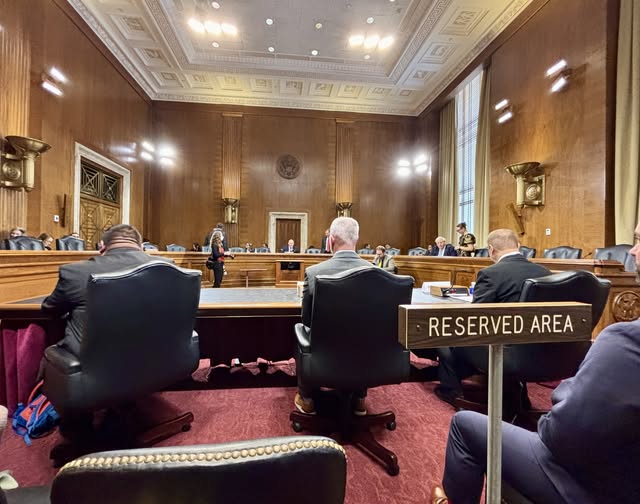
The Senate Energy and Natural Resources Committee held a committee hearing to “examine the Section 106 consultation process under the National Historic Preservation Act (NHPA).” Preservation Action along with several of our national partners attended and worked to educate members of the Committee ahead of the hearing on the importance of the NHPA and effectiveness and efficiency of the Section 106 process.

Thank you to everyone that took action! It is clear your advocacy had an impact. We will continue to educate members of Congress on the importance of NHPA and push back on any attempts to weaken this critical law.

Preservation Action submitted written testimony for the record. You can review our testimony and watch the full hearing at the links below. Stay tuned for more!

Preservation Action Written Testimony on Senate Hearing Examining Section 106

Full Committee Hearing to Examine the Section 106 Consultation Process Under the National Historic Preservation Act

Take Action: Hearing Scheduled to Examine Section 106 Process Under National Historic Preservation Act

UPDATE: Oct. 29. 2025

The Senate Energy and Natural Resources Committee held a committee hearing to “examine the Section 106 consultation process under the National Historic Preservation Act (NHPA).” Preservation Action along with several of our national partners attended and worked to educate members of the Committee ahead of the hearing on the importance of the NHPA and effectiveness and efficiency of the Section 106 process.

Thank you to everyone that took action! It is clear your advocacy had an impact. We will continue to educate members of Congress on the importance of NHPA and push back on any attempts to weaken this critical law. Preservation Action submitted written testimony for the record. You can review our testimony here. Stay tuned for more!

You can watch the full hearing and read testimony from the witnesses here.


The Senate Energy and Natural Resources Committee announced this week they would hold a full committee hearing to “examine the Section 106 consultation process under the National Historic Preservation Act (NHPA).” We are still awaiting more details, but the hearing is scheduled for Wednesday, Oct. 29th at 9:30am and will be broadcast on the committee’s website. Preservation Action will be there and is working closely with our partners to educate Senate offices.

We need your voice! Senators, especially Senators that serve on the Senate Energy and Natural Resources Committee, need to hear from you about the importance of the National Historic Preservation Act and the success of the Section 106 process. See suggested talking points below. 

Overview

The NHPA, enacted in 1966, created the national framework that allows us to identify, protect, and celebrate the historic places that tell America’s story. The Act established State and Tribal Historic Preservation Offices (SHPOs & THPOs) and the Advisory Council on Historic Preservation (ACHP) — building a partnership that connects local voices to federal decision-making. Section 106 review ensures that federal projects consider their impacts on historic and cultural resources before decisions are made — keeping communities, Tribal Nations, and preservationists at the table.

In recent years, some federal lawmakers have sought to create more “efficiencies” in the federal permitting process, including changes to the National Environmental Policy Act, legislative efforts that exempt certain federal undertakings from the NHPA, and more recently the declaration of an Energy Emergency, which allows for sped up Section 106 review times for energy related projects.

While we appreciate the opportunity to discuss ways the process could be improved and no process is perfect, Section 106 continues to be a highly effective collaborative process with a proven track record of efficiency and success.

Talking Points

  • Balancing preservation with progress:
    Section 106 does not stop or block projects
    — it ensures that federal agencies consider historic properties early in project planning and seek ways to avoid, minimize, or mitigate adverse effects.
  • Efficient and predictable:
    Despite reviewing thousands of federal undertakings annually, the vast majority are completed quickly and efficiently by SHPOs and THPOs without delay. In Washington state for example, out of more than 5,000 Section 106 reviews performed by the SHPO in FY25, only 8% found adverse effects and the average review response time for undertakings was 3.7 days.
  • Built-in flexibility:
    Section 106 regulations have built-in flexibility that can improve effectiveness and efficiency.
    Program alternatives, like Programmatic Agreements, allow agencies to expedite review for routine or recurring project types — saving time while ensuring preservation values are upheld.
  • Encourages early planning and smarter project design:
    When agencies integrate Section 106 early, they can avoid costly redesigns or litigation by addressing historic preservation concerns upfront.
  • Proven record of success:
    Section 106 has facilitated countless successful federal projects
    — highways, energy infrastructure, housing, and more — while protecting historic places of national and community importance. Check out some Section 106 success stories.
  • Continued Investment in the preservation of our nation’s history:
    Especially as we prepare to commemorate the 250th anniversary of our nation, the 60th anniversary of the NHPA, and the 50th anniversary of the Historic Preservation Fund in 2026, we should be investing in preserving our nation’s history. Increased funding for SHPOs and THPOs would enhance staffing, technology, and consultation capacity, helping them process reviews more efficiently, and keep pace with growing federal project demands.

Take Action

Contact your Senators, especially if your Senator serves on the Senate Energy and Natural Resources Committee (listed below), and let them know why the National Historic Preservation Act is important and how the Section 106 process has worked effectively and efficiently in your state. Use the talking points above and provide local examples of Section 106 successes.

If you have a personal contact in your Senator’s office, contact them directly. If that contact does not handle Public Lands or Natural Resources issues, ask them to share your message with the appropriate staff person in their office.

You can contact your Senator’s office by calling the Capitol switchboard at (202) 224-3121 and ask to be connected to your Senator’s office. If you need any help finding staff contacts, feel free to reach out to Rob Naylor at Preservation Action (rnaylor@preservationaction.org). 

Senators on the Energy and Natural Resources Committee:

Sen. Mike Lee (R-UT)

Sen. Martin Heinrich (D-NM)

Sen. John Barrasso (R-WY)

Sen. Ron Wyden (D-OR)

Sen. James Risch (R-ID)

Sen. Maria Cantwell (D-WA)

Sen. Steve Daines (R-MT)

Sen. Mazie Hirono (D-HI)

Sen. Tom Cotton (R-AR)

Sen. Angus King (I-ME)

Sen. David McCormick (R-PA)

Sen. Catherine Cortez Masto (D-NV)

Sen. Jim Justice (R-WV)

Sen. John Hickenlooper (D-CO)

Sen. Bill Cassidy (R-LA)

Sen. Alex Padilla (D-CA)

Sen. Cindy Hyde-Smith (R-MS)

Sen. Ruben Gallego (D-AZ)

Sen. Lisa Murkowski (R-AK)

Sen. John Hoeven (R-ND)

Additional Resources

National Conference of State Historic Preservation Officers: Federal Permitting Process Under a Microscope

American Cultural Resources Association: Take Action Now: Senate Hearing on Section 106

Advisory Council on Historic Preservation: Section 106 Review Process Handout

Advisory Council on Historic Preservation: Section 106 Success Stories

Stay tuned for more….